Table of Contents
ToggleBringing greenery into a home with a curious cat comes with a real concern: many popular house plants are toxic if ingested. The good news? You don’t have to choose between a thriving indoor garden and a safe feline companion. Cat-safe house plants exist in dozens of varieties, from low-maintenance foliage to colorful bloomers that’ll brighten any room. This guide walks homeowners through 12 excellent options that are both non-toxic to cats and genuinely easy to grow, so you can enjoy the air-purifying benefits and visual appeal of indoor plants without the worry.
Key Takeaways
- House plants that are safe for cats exist in dozens of varieties, including spider plants, ponytail palms, and Boston ferns, eliminating the need to choose between indoor gardening and feline safety.
- Many common houseplants like lilies, dieffenbachia, and philodendrons are toxic to cats and can cause symptoms ranging from mild drooling to severe kidney failure, making plant selection critical.
- Cat-safe plants like orchids and African violets offer blooms and color without toxicity risk, while their placement on high shelves and in stable, heavy pots prevents accidents.
- Providing alternative textures such as cat grass and using standard, pest-free potting soil without pesticides protects both your cat’s health and your plant investment.
- Starting with one or two low-maintenance cat-safe varieties gives beginners confidence to expand their indoor garden while maintaining a safe environment for curious cats.
Why Plant Safety Matters When You Have Cats
Cats are naturally curious and often chew on leaves out of boredom, teething, or simple exploration. Some common houseplants, lilies, dieffenbachia, philodendrons, and sago palms, can cause serious illness or even be fatal if ingested by cats. Symptoms of plant toxicity range from mild (drooling, vomiting) to severe (kidney failure, cardiac arrhythmias).
The ASPCA keeps a comprehensive list of toxic and non-toxic plants, and it’s worth checking before bringing any new greenery home. Beyond toxicity, you’ll also want to think about placement: tall plants that could topple over, plants with sharp edges, or those with delicate foliage that cats might destroy. Choosing cat-safe varieties removes the guesswork and lets you garden with confidence.
Another practical consideration is that some plants attract more curiosity than others. A trailing vine might tempt a cat to pounce, while a sturdy, upright plant is less likely to become a toy. Knowing both the safety profile and the growth habit of each plant helps you select species that fit your cat’s personality and your home’s layout.
Best Low-Maintenance Cat-Safe Plants for Your Home
If you want the ease of set-it-and-forget-it greenery, low-maintenance options are your best bet. These plants tolerate irregular watering, lower light, and general neglect, making them ideal if life gets busy or you’re new to plant parenthood.
Spider Plants are often called the gold standard for beginners and cat owners alike. They grow quickly, produce long, arching leaves that add visual interest, and are completely safe if your cat nibbles on them. Spider plants also produce dangling offspring (plantlets) that you can propagate into new plants.
Ponytail Palms are another winner. Even though their name, they’re succulents, not true palms, with thick, bulbous trunks and fine, grass-like foliage. They need bright, indirect light and infrequent watering (overwatering is their main enemy). They’re slow-growing but striking as a statement piece.
Boston Ferns add softness and humidity-loving elegance to bathrooms or humid kitchens. They prefer consistent (but not soggy) moisture and indirect light. If fronds brown out, they often recover with a trim and humidity boost. Though they require a bit more attention than spider plants, they’re still manageable for most homes. Common Succulent House Plants: Transform Your Home with Low-Maintenance Greenery offer similar care profiles if you’re drawn to drought-tolerant varieties.
All three of these plants also support cat wellness with air-purifying qualities, making them dual-purpose additions to your space.
Flowering Plants That Are Toxic-Free and Cat-Friendly
Not every flowering plant is off-limits to cat owners. A few genuinely safe bloomers add color and fragrance without risk.
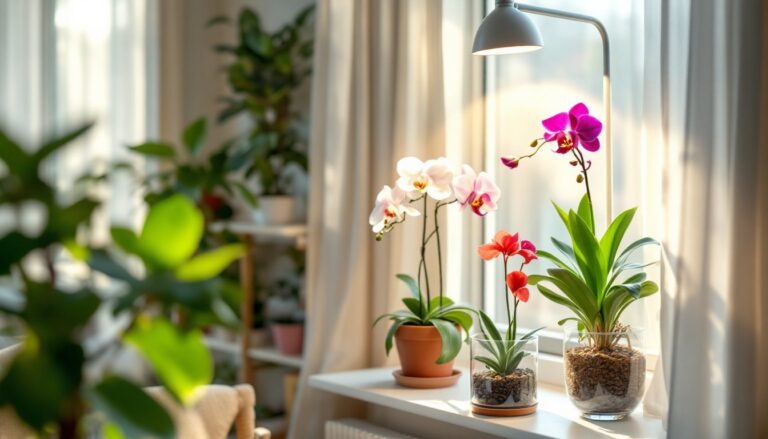
Orchids are surprisingly tough and long-blooming. They thrive in bright, indirect light and prefer to dry out slightly between waterings. Most orchids bloom for weeks or even months, making them excellent value. They’re also slow-growing, so they won’t outpace your care capacity quickly.
African Violets produce cheerful, fuzzy flowers in purple, pink, or white and prefer bright, filtered light. They like consistently moist (not waterlogged) soil and benefit from watering from below, pour water into a saucer and let the pot absorb it. They’re compact and perfect for shelves or windowsills. Many hybrid varieties are commercially available, so you’ll find colors and sizes that match your décor.
Calathea plants offer ornamental foliage with subtle, delicate flowers. Their leaves feature striking patterns, stripes, spots, or solid colors, making them visually interesting even without blooms. Calatheas prefer humidity and indirect light, so they’re ideal bathroom or kitchen companions. They’re fussier than spider plants but rewarding if you’re willing to dial in their conditions.
According to resources on pet-friendly houseplants, these three are among the safest flowering options. The comprehensive guide to 10 easy-to-grow pet-safe plants also highlights their resilience and visual appeal.
How to Protect Your Cats While Growing Indoor Plants
Even with safe plants, a few precautions minimize risk and protect your plant investment.
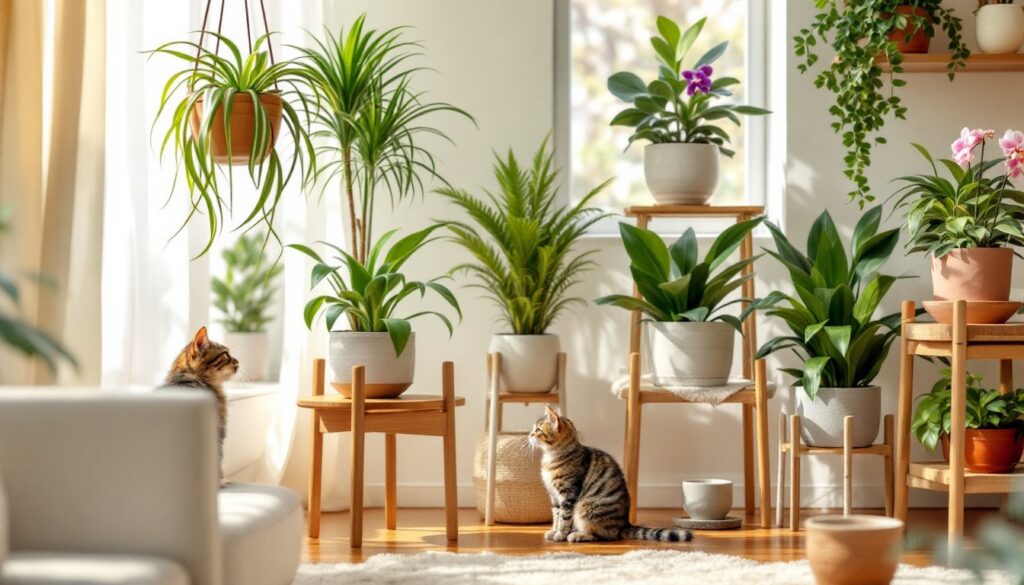
Placement is everything. Position tall plants on high shelves or sturdy plant stands where curious cats can’t knock them over or reach the soil (which can attract digging). Hanging planters work well for trailing plants like spider plants. Keep plants out of bedrooms or enclosed spaces where a cat might be trapped if a pot falls.
Use heavy, stable pots. Ceramic, concrete, or ceramic pots with low centers of gravity resist tipping. Avoid lightweight plastic unless the pot sits on a secure surface. Make sure the pot is large enough for the plant’s root system, plants in undersized pots dry out quickly and stress more easily.
Watch for soil additives. Some potting mixes contain perlite or fertilizer that can irritate a cat’s mouth if ingested. Use standard, pest-free potting soil from a reputable supplier. Avoid soils marketed for outdoor use, which may contain pesticides or fungicides.
Provide alternative textures. If your cat seems obsessed with chewing plants, offer cat-safe alternatives: cat grass (grown indoors), or pet-safe toys with varied textures. A scratching post or climbing tree also redirects energy away from plants.
Check water and misting regularly. Standing water in pot saucers can attract mosquitoes or harbor bacteria. Empty saucers after watering. If you mist plants for humidity, do so when cats aren’t nearby, some cats dislike water droplets, and you want to avoid them licking wet leaves.
Fertilize sparingly. Most houseplants need minimal feeding, especially in winter. When you do fertilize, use a diluted, balanced formula (like 10-10-10) and apply it directly to soil, not foliage. Wash your hands after handling any fertilizer product.
With proven tips for keeping resilient plants alive, you’ll develop a routine that works for both you and your cat.
Conclusion
Growing a cat-safe indoor garden is entirely achievable and rewarding. Start with one or two low-maintenance varieties, spider plants or ponytail palms are foolproof, and expand as you gain confidence. Pay attention to placement, pot stability, and soil quality, and your plants will thrive alongside your feline friend. The combination of fresh air, visual greenery, and the peace of mind that comes with non-toxic plants makes the effort worthwhile.