Table of Contents
ToggleSnake plants are often recommended as one of the best starter houseplants, and for good reason. These hardy, architectural beauties tolerate neglect better than most indoor plants, but that doesn’t mean you can ignore them entirely. Getting the watering schedule right is crucial because overwatering is the quickest way to kill a snake plant. Unlike other houseplants that thrive on consistent moisture, snake plants store water in their thick, fleshy leaves and prefer to dry out between waterings. Understanding how often to water snake plants keeps them healthy, prevents root rot, and ensures those striking vertical leaves stay vibrant for years.
Key Takeaways
- Water snake plants every 2 to 3 weeks during spring and summer, and every 4 to 6 weeks during fall and winter dormancy.
- Use the soil moisture test rather than a fixed calendar—stick your finger 1 to 2 inches into the soil, and only water when it feels completely dry.
- Overwatering is the #1 cause of snake plant death; let the soil dry out between waterings to prevent root rot and fungal issues.
- Environmental factors like pot size, light conditions, humidity, soil drainage, and temperature significantly affect how often to water snake plants.
- Thoroughly water until drainage flows from the bottom, then empty the saucer within 15 minutes to prevent roots from sitting in standing water.
- Skip misting and use only well-draining potting mix (cactus blend or regular soil mixed with perlite and sand) to keep your snake plant healthy and vibrant.
How Often to Water Snake Plants
The Basic Watering Schedule
The golden rule for snake plant watering is simple: water every 2 to 3 weeks during the growing season (spring and summer), and every 4 to 6 weeks during dormancy (fall and winter). But here’s the catch, this timeline is a baseline, not gospel. The actual frequency depends heavily on your specific conditions, which we’ll cover next.
In practice, most experienced growers use the soil moisture test rather than a rigid calendar. Stick your finger about 1 to 2 inches into the soil. If it feels dry at that depth, water thoroughly until it drains from the pot’s bottom. If soil still feels damp, wait another week and check again.
When you do water, don’t trickle. Give the plant a proper watering so water flows freely from the drainage holes, flushing out any salt buildup. Then stop, don’t let the pot sit in standing water. Empty the saucer after 15 minutes to prevent the roots from sitting in moisture.
Factors That Affect Watering Frequency
Several conditions in your home determine whether your snake plant needs water every 2 weeks or every 5 weeks.
Pot Size and Material
A snake plant in a small pot with fast-draining soil may dry out in 10 days. The same plant in a large, glazed ceramic pot with dense potting mix might take 4 weeks. Clay and terracotta pots breathe better and dry faster than plastic or ceramic: the soil dries differently in each. Choose a pot only 1 to 2 inches larger than the root ball to avoid waterlogging.
Light Conditions
Snake plants are tolerant of low light, but bright, indirect light accelerates water uptake. A plant sitting next to a sunny window will dry out faster than one in a corner. More light means more photosynthesis, more active growth, and more water consumption. Conversely, a snake plant in low light goes into a slower metabolic state and needs less frequent watering.
Humidity and Air Circulation
Dry climates (especially heated homes in winter) cause soil to dry faster. If you live in a humid area or keep your home’s humidity above 50%, evaporation slows. Air circulation from fans or open windows also speeds drying. Basements and enclosed shelves create stagnant, humid microclimates where soil stays wet longer.
Soil Type and Drainage
Snake plants absolutely need well-draining potting mix, preferably a cactus or succulent blend, or a mix of 2 parts regular potting soil, 1 part perlite, and 1 part coarse sand. Dense, moisture-retentive soils lead to root rot. According to Snake Plant Care 101, the emphasis should always be on letting soil dry completely between waterings.
Temperature
Warmth increases evaporation. A snake plant in a warm room (70–80°F) dries faster than one in a cool space (60–65°F). Winter heating in northern climates can trick you into thinking the plant needs water when it actually doesn’t, resist that urge.
Seasonal Watering Adjustments
Snake plants slow their growth significantly in fall and winter, so they need far less water during these months.
Spring and Summer (Active Growing Season)
This is when your snake plant grows most actively. Evaporation is higher, soil dries faster, and the plant’s water demand is greatest. Water every 2 to 3 weeks, or when the top 1 to 2 inches of soil are completely dry. Don’t skip checks just because you’re busy: even during the growing season, you’re checking soil, not watering on a fixed schedule.
Fall and Winter (Dormancy)
As temperatures drop and daylight decreases, snake plants essentially go dormant. Growth slows to a crawl, and water uptake plummets. You might only water every 4 to 6 weeks, or even less frequently if your home is cool. A snake plant in a 60°F room over winter can go 6 to 8 weeks without water. The easiest house plants to keep alive include snake plants partly because they’re so forgiving during the dormant season.
If you live in a climate with natural seasonal changes (windows with cold drafts in winter, warmer rooms in summer), adjust naturally. If your home stays at a constant 72°F year-round with consistent lighting, you’ll need to be more deliberate about reducing winter watering. Many homeowners in stable indoor climates accidentally overwater in winter because the season doesn’t feel different to them.
Signs Your Snake Plant Needs Water
Forget the guesswork. Learn to read your snake plant’s signals.
Visual Cues of Thirst
When a snake plant is genuinely thirsty, the leaves become noticeably softer and less rigid. You may see very slight wrinkling or shrinking of the leaves, and the entire plant may look a bit droopy. The leaves might also take on a slightly dull tone. These are mild stress signals, the plant isn’t dying, but it’s asking for a drink.
Soil Feedback
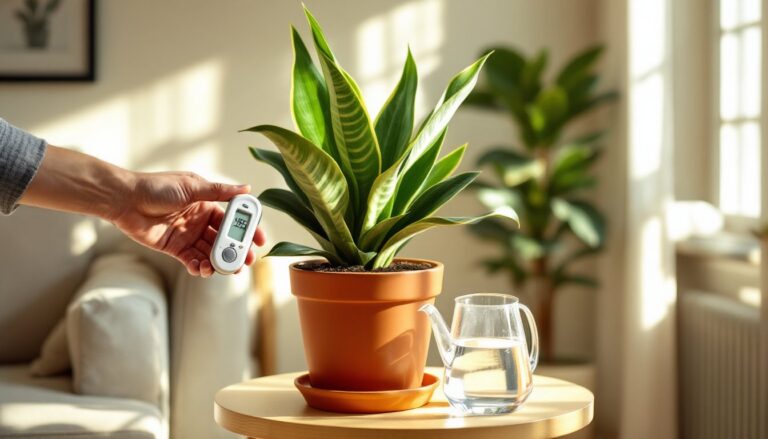
Lift the pot. A dry pot is surprisingly light compared to a freshly watered one. After you water a few times, you’ll intuitively know the difference. Alternatively, a soil moisture meter (a simple, inexpensive tool available at any garden center) removes guesswork. Stick it in, and it tells you the moisture level numerically or via a gauge.
The Finger Test (Most Reliable)
Insert your finger into the soil about 1 to 2 inches deep. If it’s dry, water. If it’s damp or cool to the touch, wait. This works reliably for snake plants because they’re succulent-like and don’t want any moisture sitting around their roots.
Common Watering Mistakes to Avoid
Most snake plant problems trace back to watering errors. Here’s what to avoid.
Overwatering
This is the #1 killer. Overwatering causes root rot, a fungal or bacterial infection that turns roots to mush. Once root rot sets in, the plant can die within weeks. Signs include mushy, brown stems at the base and a sour smell from the soil. Overwatering is usually driven by guilt, people think “I haven’t watered in a week, I’d better water now.” Resist that instinct. Snake plants would rather be forgotten than smothered with kindness.
Watering on a Fixed Schedule
Watering every Saturday, regardless of conditions, is a recipe for disaster. Your plant doesn’t wear a calendar. Conditions change week to week (especially with seasonal shifts), so always check soil moisture first.
Using Cold Water
Cold tap water can shock the roots. Room-temperature water is fine: if your water is notably cold (like from a faucet in winter), let it sit for an hour or use lukewarm water.
Poor Drainage
If your pot lacks drainage holes or you’re using heavy, dense soil, you’re asking for trouble. Snake plants need a draining pot and appropriately fast-draining medium. Regular potting soil alone is too dense: mix in perlite or sand. Resources like Better Homes & Gardens snake plant care guide consistently recommend using well-draining soil as a non-negotiable step.
Misting
Snake plants don’t appreciate misting. They’re succulent-like and prefer dry air. Moisture on the leaves can lead to fungal issues. Skip the mister and let the plant be.
Conclusion
Watering a snake plant boils down to one principle: let the soil dry out between waterings. Check your soil, water thoroughly when it’s dry 1 to 2 inches down, and resist the urge to water again until it dries. Adjust for season, light, pot type, and your specific home environment. Stick to this approach, and your snake plant will reward you with years of striking growth and virtually zero fuss. In a home full of demanding plants, the snake plant is the quiet overachiever that asks for almost nothing, except the right watering rhythm.