Table of Contents
ToggleGrowing herbs indoors transforms your kitchen into a year-round produce station. Whether you’re cooking dinner on a snowy February night or summer, having fresh basil, mint, and cilantro within arm’s reach beats buying sad grocery-store bundles. Indoor herb plants deliver flavor, fragrance, and genuine satisfaction, they’re simple enough for beginners but engaging enough to keep experienced gardeners interested. This guide walks through everything you need to know to start and maintain a thriving indoor herb garden.
Key Takeaways
- Indoor herb plants deliver fresh basil, mint, and cilantro year-round at minimal cost, with a single potted basil plant producing enough leaves to replace three or four supermarket bunches over a season.
- Success with indoor herbs depends on three fundamentals: 6–8 hours of direct or bright indirect light daily, watering when the top inch of soil feels dry, and using quality potting mix with proper drainage.
- Basil, mint, and parsley are the easiest herbs to grow indoors for beginners, while rosemary and thyme require brighter light and more careful watering management.
- Always use pots with drainage holes (typically 4–6 inches for most herbs) and place them in south-facing windows or supplement with LED grow lights if natural light is limited.
- Harvest regularly by pinching leaves from the top to encourage bushier growth, and start succession plantings every 3–4 weeks to maintain consistent production throughout the year.
- Monitor for pests like spider mites and fungus gnats by checking leaf undersides weekly, and maintain good air circulation with a small fan to prevent fungal issues.
Why Indoor Herbs Are Game-Changers for Your Home
Fresh herbs at your fingertips beat waiting for a delivery or a trip to the grocery store. Indoor herb plants offer year-round access to ingredients that would otherwise cost a premium, especially in winter. A single potted basil plant produces enough leaves to replace three or four supermarket bunches over a season.
Beyond the kitchen, indoor herbs improve air quality and add visual interest to windowsills, shelves, and kitchen counters. Many herbs like mint and oregano release subtle fragrances when you brush past them, making them as pleasant to be around as they are useful. Unlike many houseplants, herbs actively reward your attention, you harvest them, they grow back faster. It’s a feedback loop that keeps people motivated.
The investment is minimal. A small pot, potting soil, and herb seeds run maybe $15–20 total, and a single plant can produce harvests for months. Plus, there’s something deeply satisfying about pulling fresh herbs for dinner without leaving home.
Best Herbs to Grow Indoors
Not all herbs are created equal when it comes to indoor growing. Some tolerate lower light and inconsistent watering: others are finicky. The good news is plenty of kitchen staples thrive indoors with minimal fuss.
Basil, Mint, and Parsley: The Easy Winners
Basil is the MVP of indoor herbs. It germinates quickly (7–10 days), grows fast, and rewards frequent harvesting with bushier growth. Sweet basil is the most common variety, though Thai basil and lemon basil work too. Keep it in a bright window with consistent moisture, not soggy, just moist. Basil hates cold, so position it away from drafty windows in winter.
Mint is nearly foolproof. It grows aggressively, so aggressively you should isolate it in its own pot to prevent it from crowding out neighbors. Spearmint and peppermint are the standard choices. Mint tolerates lower light better than many herbs, making it perfect for kitchens without direct sun. Water when the top inch of soil feels dry.
Parsley takes a bit longer to germinate (2–3 weeks), but once it’s rolling, it’s steady and dependable. Flat-leaf (Italian) parsley is hardier than curly parsley indoors. It appreciates consistent moisture and moderate light.
Culinary Favorites: Cilantro, Thyme, and Rosemary
Cilantro grows quickly and produces usable leaves within weeks. The catch: it bolts (flowers and goes to seed) fast, especially as days lengthen in spring. Start new plants every 3–4 weeks if you want continuous supply. Cilantro prefers cooler indoor temps around 65–70°F, so it’s ideal for fall and early spring.
Thyme is drought-tolerant and woody, which means it’ll last longer than annual herbs like basil. It doesn’t mind lower light but needs excellent drainage. Use a pot with drainage holes and let the soil dry between waterings. Thyme responds well to light pruning, which encourages bushier growth.
Rosemary is trickier indoors because it demands bright light and good air circulation. A south-facing window is ideal. Rosemary is also slow-growing, so don’t expect explosive harvests. But, once established, it lasts years, making it a long-term investment. Most rosemary plants prefer slightly drier conditions, overwatering is the main killer. Research from The Spruce recommends rotating rosemary weekly to ensure even growth under artificial light.
Setting Up Your Indoor Herb Garden: Light, Water, and Soil
Success hinges on three fundamentals: light, water, and soil. Get these right, and your herbs will thrive: miss them, and you’ll struggle.
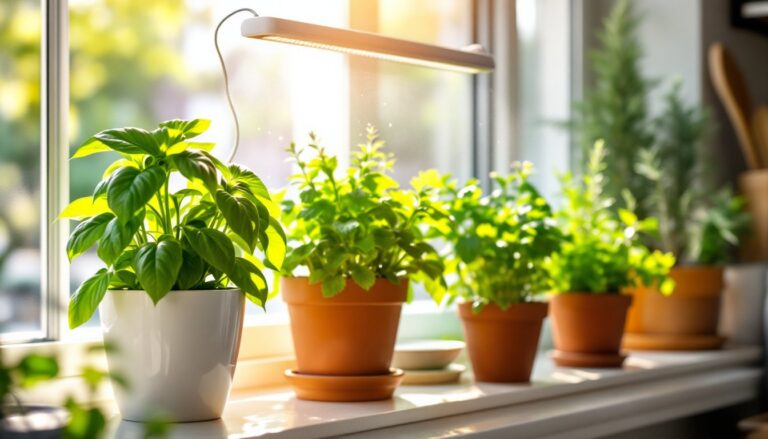
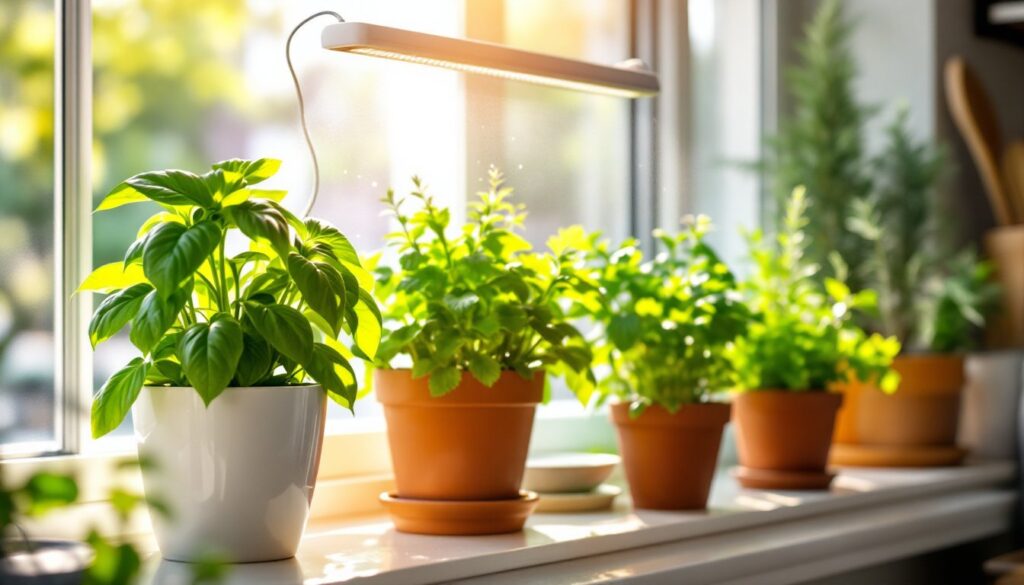
Light is the bottleneck. Most culinary herbs need 6–8 hours of direct or very bright indirect light daily. A south-facing window is gold: east or west-facing works with some compromise: north-facing is tough unless you add supplemental light. If your windows don’t deliver, a basic LED grow light ($20–50) placed 6–12 inches above plants makes an enormous difference. Basil, mint, and parsley are more forgiving of lower light than rosemary or thyme.
Watering is where beginners falter. The rule: water when the top inch of soil feels dry to the touch. Most potted herbs prefer slightly moist soil but hate sitting in water, which causes root rot. Use your finger, literally stick it in the soil. Don’t rely on a schedule: instead, check plants twice a week, especially in warm weather. Winter growth slows, so watering needs drop too.
Soil matters more than many realize. Standard indoor potting mix works, but a blend that retains moisture slightly better (like mixing in a bit of peat or coconut coir) helps. Avoid garden soil: it’s too dense and compacts indoors. If you want to splurge, a quality potting mix with perlite or vermiculite improves drainage while holding moisture steadily. According to Better Homes & Gardens, herbs grown in commercial potting mixes show stronger root development than those in homemade blends.
Temperature and humidity matter too. Most herbs prefer 65–75°F. Cold drafts kill basil fast. Humidity levels between 40–50% are ideal: kitchen windowsills often hit that naturally thanks to cooking steam. If air is very dry (from heating in winter), occasional misting helps, though it shouldn’t replace proper watering.
Container Selection and Placement Tips
Container choice directly affects drainage, growth, and longevity. Pots too large hold excess moisture: too small, and roots crowd and dry out quickly.
Start with 4–6 inch pots for most herbs. That size accommodates a mature plant for several months and fits standard windowsills. Basil, mint, and parsley are happy here: rosemary and thyme might prefer 6–8 inch pots if you’re growing them long-term.
Drainage is non-negotiable. Every pot needs drainage holes in the bottom. Excess water must exit, or roots rot. If you love a pot without holes, slip it inside another with drainage and set a saucer underneath. Never let plants sit in standing water.
Material choice affects watering frequency. Terracotta breathes and dries faster, great for thyme and rosemary but means more frequent watering for moisture-loving basil. Plastic or ceramic pots retain moisture longer, suiting basil and mint. Match the pot to the herb’s preferences.
Placement shapes success. South-facing windowsills are prime real estate for herbs. East or west windows work too, especially for basil and mint. North windows require supplemental lighting. Keep pots away from cold drafts in winter and away from heating vents that dry air dramatically. A kitchen window near the stove or sink is ideal, convenient for harvesting and watering, plus humidity helps. You can also integrate herbs with most common house plants in a shared display if your windowsill space allows, though herbs should get priority light.
Harvesting and Maintaining Healthy Indoor Herbs
Harvesting isn’t just about getting dinner ready, it’s the engine that keeps plants healthy and productive.
Start harvesting once plants have several sets of true leaves, usually 3–4 weeks after germination for fast growers like basil and cilantro. Pinch or cut leaves from the top, removing the uppermost node (the point where leaves branch). This encourages bushier, fuller growth instead of tall, leggy plants. Never strip more than one-third of the plant at once: leave enough foliage to power regrowth.
Basil and mint respond beautifully to frequent harvesting. More you pick, the more they branch. Cilantro bolts quickly but harvesting delays flowering briefly. Thyme and rosemary need lighter, more regular pruning rather than aggressive cutting.
Watch for pests and disease. Indoor herb plants aren’t immune. Spider mites, whiteflies, and fungus gnats can show up, especially if humidity is high or air circulation is poor. Check undersides of leaves weekly. Small infestations respond to insecticidal soap or neem oil spray (follow label directions). Good air circulation, a small fan on low speed, prevents most fungal issues. You can reference our guide to dealing with gnats in house plants if tiny insects invade.
Expect slower growth in winter. Days are shorter, light intensity drops, and plants naturally slow. Don’t panic or overwater trying to compensate. Reduce watering frequency and don’t fertilize until spring. A balanced houseplant fertilizer (diluted to half strength) once a month in growing season (spring through early fall) supports production without overfertilizing.
Plan succession plantings. Start a new pot of basil or cilantro every 3–4 weeks so you always have young, productive plants coming online. Old plants eventually slow down: fresh plants pick up the slack. This approach keeps your harvests consistent year-round, turning your herb garden into a reliable kitchen resource.