Table of Contents
ToggleGrowing tomatoes in containers brings fresh produce to patios, decks, and balconies without the space demands of in-ground gardens. But container tomatoes have different watering needs than their garden counterparts, and getting it wrong is the fastest way to kill them. Whether you’re dealing with wilting vines from underwatering or root rot from too much moisture, nailing the watering schedule makes the difference between a thriving harvest and disappointment. This guide walks through the practical factors that determine how often to water tomato plants in pots, gives you a real-world schedule, and shows you exactly how to check soil moisture without guessing.
Key Takeaways
- Water tomato plants in pots once daily during the growing season using a 5–10 gallon container, watering deeply until water drains from the bottom.
- Container material and size significantly affect watering frequency—terracotta dries faster than plastic, and larger pots retain moisture longer and require less frequent watering.
- Check soil moisture with a simple finger test 2 inches deep; if dry, water thoroughly; if moist, skip watering to avoid the most common mistake of overwatering and root rot.
- Water early in the morning between 6 AM and 9 AM at the base of the plant to rehydrate after transpiration, reduce disease risk, and allow excess moisture to drain.
- During peak heat above 90°F or in fast-draining pots, increase frequency to twice-daily watering, while fall and cooler seasons require less frequent watering as soil moisture retention improves.
- Mulching the soil surface with 2–3 inches of organic material slows evaporation and can reduce watering frequency, helping you maintain consistent moisture for healthier tomato growth.
Factors That Determine Watering Frequency For Container Tomatoes
Container tomatoes don’t have access to deep soil moisture like in-ground plants, so they dry out faster and need more frequent watering. But “more frequent” doesn’t mean the same schedule works everywhere. Several variables control how thirsty your pots get, and understanding them beats following a one-size-fits-all rule.
Pot Size And Container Material
A 5-gallon bucket holds more soil and retains moisture longer than a 2-gallon pot, even with the same plant and climate. Larger containers reduce watering frequency because there’s more soil mass to hold water. For tomatoes, use at minimum a 5-gallon container per plant, 10 gallons is better for indeterminate (vining) varieties that grow all season.
Material matters too. Terracotta and clay pots are porous and let moisture escape through the sides, so they dry out faster than plastic or glazed ceramic. A terracotta pot might need watering daily in hot weather, while the same size plastic pot might go a day or two longer. Fabric grow bags sit somewhere in the middle, they’re porous but not as much as terracotta. If you’re using terracotta, expect to water more often, and consider lining the inside with a plastic bag to slow evaporation. Plastic pots and fabric containers are practical choices for container tomatoes because they retain moisture longer and reduce your watering frequency.
Climate And Seasonal Conditions
Heat, humidity, wind, and sun all affect soil drying speed. A tomato pot sitting in full Arizona sun dries out in hours during summer, while the same pot in partial shade in a coastal climate might stay moist for two days. If you’re getting high temperatures (85°F+), strong wind, or low humidity, your pots will need water more often. Even seasonal changes matter, spring and fall watering is lighter than summer, and winter dormancy (if you’re in a frost-free zone growing year-round) cuts needs dramatically.
Rainy periods also matter. After a soaking rain, your pots may need no additional water for a day or two. During drought stretches, daily or even twice-daily watering might be necessary. The key is checking the soil, not just following a calendar.
The Essential Watering Schedule For Potted Tomatoes
In most conditions, water tomato plants in pots once daily during the growing season. This is the baseline for a 5–10 gallon container in typical summer weather (70–85°F, moderate humidity, average sun). Water deeply until water drains from the bottom, this ensures the entire root zone gets moisture, not just the top inch.
During peak heat (90°F+) or in very fast-draining pots (small containers, terracotta, sandy soil mixes), you may need to water twice daily, usually morning and evening. Morning watering is ideal because it rehydrates the plant after a night of transpiration and leaves time for excess moisture to drain before sunset, reducing disease risk.
As temperatures cool in fall (below 70°F), reduce frequency to every other day or less. The soil stays moist longer, and the plant’s water demand drops. Early and late season (spring start and fall finish) often need less frequent watering than mid-summer. Growing tomatoes in containers
If you go away for a few days, a drip irrigation system or soaker hose on a timer solves the problem. They deliver water slowly and directly to the soil, reducing waste and ensuring consistent moisture even if you’re not home.
How To Check Soil Moisture And Avoid Common Mistakes
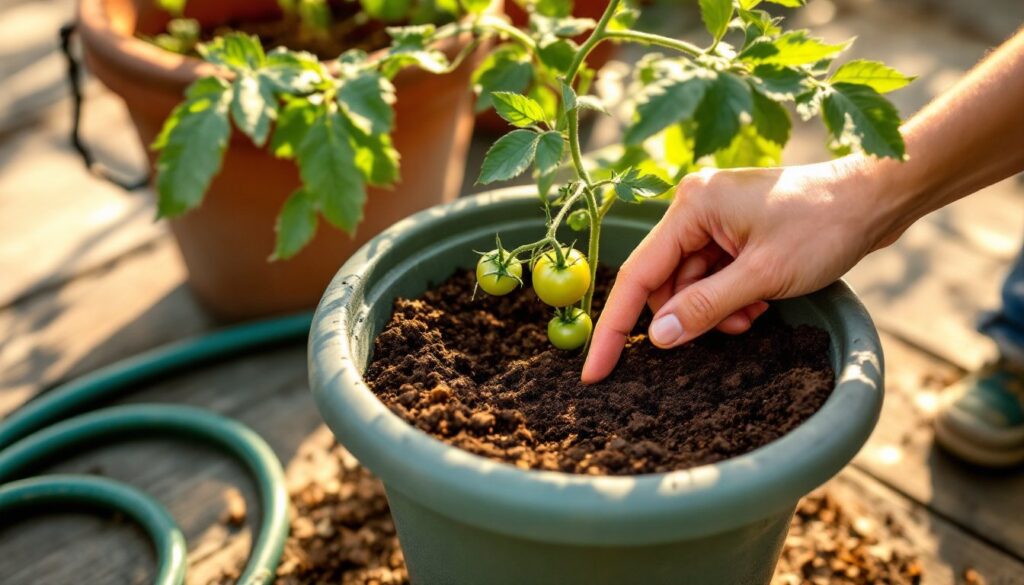
Checking soil moisture is simple and beats guessing every time. Stick your index finger 2 inches into the soil. If it feels moist, skip watering. If it feels dry at that depth, water thoroughly. This takes 10 seconds and works in any condition, heat wave, cloudy week, or whatever.
Another reliable check: lift the pot. A freshly watered pot feels heavy. As it dries over the next day or two, it gets noticeably lighter. Once you do this a few times, you can feel when a pot needs water without even touching soil. This is honestly how most experienced container gardeners know when to water, pure tactile feedback.
Avoid these common mistakes. Underwatering is actually less common than you’d think: the real killer is overwatering. Soggy soil with no drainage leads to root rot, which kills the plant fast. Never let pots sit in standing water or saucers full of water. Ensure containers have drainage holes and water drains freely to the ground or into a saucer you empty regularly.
Watering the leaves instead of the soil wastes water and invites fungal diseases like early blight. Always water the base of the plant, and keep water off the foliage. How often you water, so checking the soil yourself is always more reliable than any fixed schedule.
Watering Techniques And Best Practices For Healthy Growth
Water early in the morning, ideally between 6 AM and 9 AM. Morning watering rehydrates the plant after overnight transpiration, gives it access to moisture during the hot part of the day, and allows excess water to drain before temperatures drop. This timing also reduces disease because foliage stays dry longer.
Water deeply and slowly. Run water at the base until it flows out the drainage holes, then wait a moment and water again. This ensures the entire root zone is saturated, not just the top couple inches. Shallow, frequent watering keeps roots near the surface, making the plant more vulnerable to drought stress.
Use room-temperature or slightly warm water. Cold water from a hose or well can shock roots in hot weather. If your water sits in a can or tank overnight, it’ll warm up naturally and be gentler on the plant.
Consider a soaker hose or drip irrigation for consistent results. These deliver water slowly right to the soil, reduce evaporation, and keep foliage dry. They’re especially valuable if you have multiple pots or can’t be home daily. A basic soaker hose costs $15–30 and lasts years.
Mulch the soil surface with 2–3 inches of shredded bark, straw, or compost. Mulch keeps the root zone cooler, slows evaporation, and moderates soil temperature swings. Leave a small gap around the stem to avoid rot. With mulch, watering frequency often drops slightly because moisture stays in the soil longer.
Adjust watering based on what you see. If leaves start to wilt by afternoon even after morning watering, increase frequency. If lower leaves yellow and feel mushy, reduce watering and improve drainage. Plants tell you what they need, you just have to listen.
Conclusion
Container tomatoes need thoughtful watering, but it’s not complicated once you understand the basics. Start with daily watering in a 5–10 gallon pot during the growing season, adjust for your specific climate and container type, and always check the soil before watering. A quick finger test takes seconds and keeps you from both underwatering and the more dangerous sin of overwatering. Combine consistent moisture with good drainage, morning watering, and mulch, and your tomato plants will reward you with healthy growth and a solid harvest.